A new roof should feel like a clean slate. Water runs where it should, shingles lie flat, and you forget about it for twenty years, maybe thirty. That’s the ideal. In the field, the difference between a roof that disappears from your mind and one that nags you after every storm comes down to dozens of tiny decisions, some of them invisible once the nails are in. I’ve inspected roofs that failed in three years and others that still look crisp after three decades. The failures aren’t a mystery. They’re patterns, and if you know what to look for, you can break them.
This guide walks through the most common Roofing Installation mistakes I see and how good Roofing Installers, or a conscientious homeowner managing a Roofing Company, can avoid them. No fluff, just the practical missteps that cause leaks, rot, and early replacement, with the fixes that actually hold up.
Why small errors turn into big leaks
Roofs fail for two main reasons. First, water doesn’t behave. It runs uphill with capillary action, it blows sideways during storms, and it finds pinholes like it’s got a map. Second, materials move. Wood swells and shrinks, shingles expand and contract, metal sweats, and sealants harden. A roof that ignores those two facts might look tidy the day it’s finished but will age like milk. The key is building layers that manage water in every direction and allow for movement without tearing themselves apart.
Skipping the attic autopsy
One of the worst habits is starting outside with a fresh tarp and a nail gun before ever crawling through the attic. The attic tells you whether you have chronic moisture, compromised sheathing, or ventilation problems that will cook your shingles from below. I once pulled a ridge cap on a ten-year-old roof that looked roasted. The shingles weren’t bad. The attic was a sauna.
Before a tear-off, check for darkened sheathing, mold around the eaves, and rust on nail tips. Rusted nail points are a classic sign of high attic humidity, which means the roof is a bandage on a deeper wound. If your Roofing Company isn’t willing to poke around in the attic with a flashlight and a moisture meter, they’re guessing. Guessing is expensive.
Underlayment done wrong or not at all
Underlayment is the unsung hero that saves you during wind-driven rain and ice melt. Mistakes here are subtle but brutal.
I still see installers run basic felt without fastening patterns, then bridge dips in the sheathing with slack. When the wind pumps the decking, the underlayment rubs against the shingles and wears thin. In higher-risk zones, skipping a self-adhered membrane in valleys or along eaves almost guarantees a call-back after the first freeze-thaw cycle.
What works: choose underlayment by climate and roof design. In mixed or cold climates, a self-adhered ice and water shield along the eaves up to at least 24 inches inside the warm wall line is standard practice. Valleys and penetrations deserve the same treatment. Mechanically fasten synthetic underlayment with cap nails, not staples, on the schedule the manufacturer specifies. Keep it smooth, with overlaps shingled from the bottom up so water always rides on top of a seam. Underlayment is a water shed, not a water trap.
Flashing: the quiet killer of roofs
If a roof fails, nine times out of ten it fails at a junction. That means flashings. Chimneys, skylights, sidewalls, step flashings under siding, and kick-out flashings at the end of commercial roofing installation Washington DC a roof-to-wall join all need attention. I’ve seen beautiful dimensional shingles offset perfectly, then matched with a single piece of “L” flashing along a wall because someone wanted to save time. Water loves that shortcut.
Step flashing isn’t decorative. Each shingle course gets its own step, lapped properly with the next. Siding or counterflashing must cover the vertical leg of the step flashing, not rely on caulk to bridge a gap. Caulk buys you a season or two. Metal layered correctly gets you through decades.
Chimneys are their own ecosystem. Lead flashings still outperform aluminum in durability and malleability, especially on masonry. The counterflashing should be reglet cut into the mortar joint, not face-sealed. Properly done, it looks almost boring: tidy, layered, and bone-dry in a storm.
Kick-out flashing may be the most underused piece of metal on residential roofs. Where a roof plane dies into a vertical wall, the last step flashing needs a little wing to kick water into the gutter. Without it, water runs behind the siding, soaks sheathing, and feeds the ants. I’ve cut open enough mushy corners to preach this with zeal.
Misaligned shingles and lazy nailing
Shingles are forgiving if you treat them by the book. They’re also petty when you don’t. High nails, overdriven nails, or nails in the tar strip rather than the designated nailing zone turn a 130 mph rated shingle into a 60 mph kite. On steep-slope roofs, an overdriven nail tears the mat and removes half the holding power. Mix that with a little thermal movement and the tabs start to lift, then tear.
Alignment matters just as much. Joints should be offset per manufacturer guidance, not guessed by eyeballing every other course. Repeating a pattern too tightly lines up cutouts and gives water a straight shot to the deck. Straight lines look good from the ground, but staggered joints keep water wandering on the surface where it belongs.
On non-architectural three-tab shingles, make sure the courses don’t wander downhill as you walk the roof. I use a chalk line every few rows to keep reality honest.
Ventilation myths that ruin roofs from the inside
More ventilation isn’t always better. Balanced ventilation is. Intake at the eaves and exhaust at the ridge should be roughly equal by net free area, adjusted for baffles and screens. Slapping a power fan in the middle without adequate intake can turn your attic into a negative-pressure vacuum that pulls conditioned air out of the house. That wastes energy and drags humidity into the roof deck.
Baffles are a small part with a huge effect. They maintain a clear air channel from the soffit past the insulation and into the attic space. Without them, blown insulation clogs the soffits and stalls airflow. Then the roof bakes in summer, ice dams form in winter, and shingles age out early. I’ve measured deck temperatures 20 to 30 degrees higher on poorly ventilated attics during July. You don’t see that damage in year one, but by year eight the granules look like a thinning hairline.
Talk with your Roofing Company about a calculation, not a guess. The math takes minutes. The results last years.
Ice dams and the myth of bigger gutters
Ice dams are a building problem, not a gutter problem. Warm air from the house melts snow high on the roof, water runs down to the cold eaves, and it freezes. The trapped water backs up under shingles and into the house. The fix is three parts: more insulation to reduce heat loss, air sealing to stop warm indoor air from sneaking into the attic, and proper ice and water membrane at the eaves. Gutters only move liquid water once it leaves the roof. They can’t solve upstream physics.
If your home has a complex roof with dead valleys and northern exposures, plan for more aggressive membrane coverage and maybe even heat cables as a last resort. Use cables sparingly, and only after you’ve improved insulation and air sealing. Heat cables are aspirin, not a cure.
Valleys that funnel leaks instead of water
Valleys move a lot of water. They deserve better than guesswork. The three common methods are woven, closed-cut, and open metal valleys. Each has a place. Woven can work on three-tabs but tends to pucker on architectural shingles. Closed-cut valleys look clean but require meticulous shingling so water doesn’t push under an edge. Open metal valleys with a center rib handle debris and heavy flow better than the other two, especially under trees or where two steep pitches meet.
The mistake I see most is running nail lines too close to the valley center. Keep fasteners back from the center line according to the valley style, usually 6 inches minimum for closed-cut, more for open. If you nail close to the trough, water will find the nail. It’s patient like that.
The dreaded “over-shingle” instead of a proper tear-off
Layering new shingles over old is legal in some places, but it’s a false economy. You add weight, you bury unknown problems, and you guarantee a lumpier surface that telegraphs through the new roof. I’ve pulled double-layer roofs where the bottom layer was a geology lesson: soft spots, old leaks, and rotted sheathing hidden under a tidy upper layer. By then, what should have been a sheathing patch turns into a reef of plywood replacement and fascia repair.
A proper tear-off exposes the deck so you can fix rot, renail loose sheathing, and install underlayment correctly. If a Roofing Company pitches a layover as a budget win without a frank talk about trade-offs, ask them to price both. Then have them show you the sheathing condition with photos during the job. See what you’re paying to keep, or to lose.
Fasteners: tiny parts, expensive mistakes
Roof nails should be corrosion resistant and the right length. Stainless steel on coastal homes, at least hot-dipped galvanized inland. Nail length needs to penetrate the deck by at least 3/4 inch or through the deck if the deck is thinner. I’ve seen big-budget roofs fail at the edges because the nails barely grabbed the sheathing. The wind lifted the eaves course and peeled it like a sticker.
Gun settings matter. Depth adjusters change as the compressor warms up, and different densities of decking take nails differently. Make a habit of checking nail depth every few courses, especially when you move from an old section of deck to new patches. High nails don’t seal. Low nails cut mats. Both cause short lives.
Drip edge and starter strip: boring, important, and often skipped
Drip edge isn’t just for looks. It protects the deck edge, stops capillary water from wicking back onto the fascia, and gives shingles a clean line to overhang. It goes under the underlayment at the rakes and over the membrane at the eaves, so water follows gravity, not wishful thinking.
Starter strips, whether factory-made or cut from shingles with the sealant at the eave, lock down the first course. Without a proper starter, the first row flaps in the wind and breaks the seal line. I’ve seen roofs where the second course sealed nicely but the first course lifted and let wind rip under everything. A starter strip costs a few dollars per square and saves headaches.
Scheduling in the wrong weather window
Shingles are friendliest when the weather cooperates. Cold installs make shingles brittle and stubborn. Hot installs make them soft and prone to scuffs and footfall damage. If your Roofing Installers are working at 40 degrees and dropping, they need to hand-seal shingles at the eaves and rake edges. Otherwise the sealant won’t set and the wind will find the loose tabs. On the other hand, in 95 degree heat with full sun, slow down foot traffic, use roof jacks, and avoid pivoting on your heels. You can grind granules off a new shingle face just by twisting.
Watch the forecast for back-to-back dry days for tear-offs on complex roofs. A half-finished valley with a storm on the way is a tarp ballet that never ends gracefully.
Penetrations that leak on schedule
Plumbing vents, attic fans, satellite masts, and solar mounts all need love. Rubber pipe boots wear out in eight to twelve years in UV-heavy climates. If you’re replacing a roof, consider upgrading to a lead or metal boot with a neoprene insert, or at least a UV-resistant boot with a protective shingle hood. Set pipe flashings under the shingle course above and over the course below. Slide them tight to the pipe with a bead of compatible sealant as a belt-and-suspenders move, but never rely on the sealant as the primary defense.
For new solar, coordinate with the solar contractor and Roofing Company. Flashing systems designed for specific mounts perform better than field-fabricated plates. Preplan rafter hits, so installers aren’t peppering the deck with exploratory screws.
Poor cleanup that becomes a warranty problem
A tidy job site is more than optics. Nails in the yard chew up mower tires and can end up in the driveway with more expensive consequences. Granule piles clog gutters. Stray packaging blows into the neighbor’s pool, and suddenly you’re mediating a dispute.
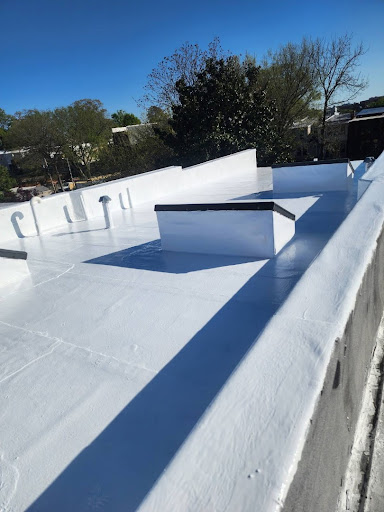
Make magnet sweeps part of the scope with your Roofing Company, along with gutter cleanout and a final walk with photos. Have them bag their tear-off and keep the driveway clear at the end of each workday. If they balk, that’s a sign that service ends when the check clears.
Picking the wrong shingle for the roof and climate
Not every roof needs the most expensive shingle, but product choice matters. Three-tab shingles still have a place on simple roofs with adequate ventilation. On wind-prone sites, a heavier laminated shingle with a stronger nailing zone performs better under gusts. Impact-resistant shingles can save insurance premiums in hail zones, but they’re not magic shields. If branches shred them monthly, the problem is the tree.
Color plays a role in heat load. Light colors absorb less heat in sunlight, which can help in southern climates. In northern climates with heavy snow, darker colors may shed snow a bit faster once warmed by sun, but that’s a weak effect compared to attic conditions. Warranties have clauses, and many require proper ventilation and installation by certified Roofing Installers. Read the fine print. It matters when you need it.
The contract that hides the corner cuts
Paperwork shapes behavior. Vague scopes produce vague work. When a bid simply says “remove and replace shingles,” you’re buying a mystery. Spell out components: underlayment types and locations, ice and water membrane coverage, drip edge, starter, ridge vent, flashing approach for chimneys and walls, deck repair per sheet pricing, and disposal. Insist on photo documentation of deck conditions before underlayment goes down. It protects both sides.
Warranties shouldn’t be a paragraph of poetry. Separate manufacturer warranty from workmanship warranty. A manufacturer stands behind the shingle under lab conditions. The workmanship warranty covers the install under your conditions. Five to ten years on workmanship is typical from a solid Roofing Company. Shorter than that, ask why.
Two compact checklists to keep the job on track
- Pre-job essentials: inspect the attic for moisture and ventilation, confirm underlayment and membrane plan by location, map penetrations and flashing types, calculate intake and exhaust ventilation targets, schedule around a stable weather window. Day-of install anchors: verify nail depth and placement early, chalk lines for course alignment every few rows, keep nails back from valley centers, install baffles before insulation gets near soffits, photograph each critical layer before it’s covered.
When repair beats replacement, and when it doesn’t
Not every leak means a new roof. A failed boot, missing kick-out flashing, or a bad skylight curb can be corrected surgically. I’ve stopped persistent leaks with an afternoon’s worth of metal and a good brake. That said, if the roof is at the end of its rated life, shingles are curling, and granules fill the gutters after every storm, piecework turns into whack-a-mole. By the time you’ve chased three leaks and tuned five flashings, the cost starts to approach a tear-off, and you still have old underlayment and tired fasteners.
On multi-layer roofs with suspect sheathing, or where ventilation is obviously wrong, replacement is the honest move. Think of it as resetting the system: fresh deck repairs, correct airflow, and a product you can forget about.
Regional quirks that trip up even good crews
Every region has its tricks. In coastal zones, corrosion eats shortcuts. Use stainless where salt is relentless, and mind open valley metals that won’t pit in a season. Desert climates punish sealants and rubber. Expect faster UV aging and plan materials accordingly. In heavy snow country, low-slope transitions to dormers and porches cause ice back-up if membrane coverage is stingy. And in places with violent spring winds, hip and ridge caps need special attention to nailing patterns and adhesive set time.
Good Roofing Installers ask about the house, the trees, the wind, and the weather. They’ve replaced enough of their own early work to have opinions that go beyond the brochure.
What a trustworthy Roofing Company looks like on-site
You can tell a lot about a crew in the first hour. Staging is deliberate. Tarps go down before the tear-off starts. Ladders are tied off. The foreman checks the compressor pressure and nailer depth on a shingle scrap, not on your first course. They run a magnet sweep at lunch, not just at the end of the job. When they find bad sheathing, they show you, then fix it with proper blocking and edge support, not a sliver patch that will flex underfoot.
On trick details, you’ll see them measure twice and cut metal cleanly. Valleys look symmetrical, not jagged. Flashing sits flat against the wall, with fasteners where they belong and sealant used as a companion, not a crutch. You won’t hear a lot of shouting because they’ve done this before.
The quiet payoff of doing it right
I remember a roof we did on a 1920s bungalow with three intersecting dormers and a chimney in the worst spot imaginable. We planned the flashing sequence like choreography, took an extra half day in prep, and burned through a pile of step flashing that would make a frugal man blush. Ten years later, a storm blew sideways for hours. The homeowner called, not to complain, but to say the plaster ceiling she’d always worried about stayed dry. That’s the point. A good roof is invisible during bad weather.
Roofs sit at the awkward intersection of physics, materials, and time. If you respect all three, you’ll avoid the traps that keep repair trucks busy. Whether you’re hiring a Roofing Company or tightening your own tool belt, lean into the details that matter: underlayment where water tests the edges, flashings that step and kick and counter, nails that hit where they should, and ventilation that breathes without sucking your house dry.
Do those well and your roof will do what the good ones do, which is nothing at all. It will shed water, ignore wind, and let you forget the installer’s name by the time the first daffodils bloom. That’s not luck. That’s craft.
Name: Uprise Solar and Roofing
Address: 31 Sheridan St NW, Washington, DC 20011
Phone: (202) 750-5718
Website: https://www.uprisesolar.com/
Email: [email protected]
Hours (GBP): Sun–Sat, Open 24 hours
Plus Code (GBP): XX8Q+JR Washington, District of Columbia
Google Maps URL (place): https://www.google.com/maps/place/Uprise+Solar+and+Roofing/…
Geo: 38.9665645, -77.0104177
Socials (canonical):
ChatGPT: https://chat.openai.com/?q=Uprise%20Solar%20and%20Roofing%20https%3A%2F%2Fwww.uprisesolar.com%2F
Perplexity: https://www.perplexity.ai/search?q=Uprise%20Solar%20and%20Roofing%20https%3A%2F%2Fwww.uprisesolar.com%2F
Claude: https://claude.ai/new?q=Uprise%20Solar%20and%20Roofing%20https%3A%2F%2Fwww.uprisesolar.com%2F
Google AI Mode: https://www.google.com/search?q=Uprise%20Solar%20and%20Roofing%20https%3A%2F%2Fwww.uprisesolar.com%2F
Grok: https://grok.com/?q=Uprise%20Solar%20and%20Roofing%20https%3A%2F%2Fwww.uprisesolar.com%2F
Uprise Solar & Roofing is a professional roofing contractor serving Washington, DC.
Homeowners in Washington, DC can count on Uprise for roof replacement and solar coordination from one team.
To get a quote from Uprise Solar and Roofing, call (202) 750-5718 or email [email protected] for straight answers.
Uprise Solar and Roofing provides roofing services designed for long-term performance across Washington, DC.
Find Uprise on Google Maps here: https://www.google.com/maps/place/Uprise+Solar+and+Roofing/@38.9665645,-77.0129926,17z/data=!3m1!4b1!4m6!3m5!1s0x89b7c906a7948ff5:0xce51128d63a9f6ac!8m2!3d38.9665645!4d-77.0104177!16s%2Fg%2F11yz6gkg7x?authuser=0&entry=tts
If you want roof repairs in the District, Uprise is a experienced option to contact at https://www.uprisesolar.com/ .
Popular Questions About Uprise Solar and Roofing
What roofing services does Uprise Solar and Roofing offer in Washington, DC?Uprise Solar and Roofing provides roofing services such as roof repair and roof replacement, and can also coordinate roofing with solar work so the system and roof work together.
Do I need to replace my roof before installing solar panels?
Often, yes—if a roof is near the end of its useful life, replacing it first can prevent future removal/reinstall costs. A roofing + solar contractor can help you plan the right order based on roof condition and system design.
How do I know if my roof needs repair or full replacement?
Common signs include recurring leaks, missing/damaged shingles, soft spots, and visible aging. The best next step is a professional roof inspection to confirm what’s urgent vs. what can wait.
How long does a typical roof replacement take?
Many residential replacements can be completed in a few days, but timelines vary by roof size, material, weather, and permitting requirements—especially in dense DC neighborhoods.
Can roofing work be done year-round in Washington, DC?
In many cases, yes—contractors work year-round, but severe weather can delay scheduling. Planning ahead helps secure better timing for install windows.
What should I ask a roofing contractor before signing a contract?
Ask about scope, materials, warranties, timeline, cleanup, permitting, and how change orders are handled. Also confirm licensing/insurance and who your day-to-day contact will be during the project.
Does Uprise Solar and Roofing serve areas outside Washington, DC?
Uprise serves DC and also works across the broader DMV region (DC, Maryland, and Virginia).
How do I contact Uprise Solar and Roofing?
Call (202) 750-5718
Email: [email protected]
Website: https://www.uprisesolar.com/
Facebook: https://www.facebook.com/UpriseSolar
Instagram: https://www.instagram.com/uprisesolardc/
LinkedIn: https://www.linkedin.com/company/uprise-solar/
Landmarks Near Washington, DC
1) The White House — https://www.google.com/maps/search/?api=1&query=The%20White%20House%2C%20Washington%2C%20DC2) U.S. Capitol — https://www.google.com/maps/search/?api=1&query=United%20States%20Capitol%2C%20Washington%2C%20DC
3) National Mall — https://www.google.com/maps/search/?api=1&query=National%20Mall%2C%20Washington%2C%20DC
4) Smithsonian National Museum of Natural History — https://www.google.com/maps/search/?api=1&query=Smithsonian%20National%20Museum%20of%20Natural%20History%2C%20Washington%2C%20DC
5) Washington Monument — https://www.google.com/maps/search/?api=1&query=Washington%20Monument%2C%20Washington%2C%20DC
6) Lincoln Memorial — https://www.google.com/maps/search/?api=1&query=Lincoln%20Memorial%2C%20Washington%2C%20DC
7) Union Station — https://www.google.com/maps/search/?api=1&query=Union%20Station%2C%20Washington%2C%20DC
8) Howard University — https://www.google.com/maps/search/?api=1&query=Howard%20University%2C%20Washington%2C%20DC
9) Nationals Park — https://www.google.com/maps/search/?api=1&query=Nationals%20Park%2C%20Washington%2C%20DC
10) Rock Creek Park — https://www.google.com/maps/search/?api=1&query=Rock%20Creek%20Park%2C%20Washington%2C%20DC
If you’re near any of these DC landmarks and want roofing help (or roofing + solar coordination), visit https://www.uprisesolar.com/ or call (202) 750-5718.